
Call us now
01243 88 24 34
How Lawn Treatment Services Can Revive a Tired, Patchy Lawn
Do You Need Scarification Or Just A Feed? Five Signs It Is Time To Rake Out The Thatch
Not sure if your lawn needs fertiliser or scarification. Here are five clear signs it is time to remove thatch and moss for healthier grass in Chichester, Emsworth and Arundel.
If your lawn still looks flat and tired after feeding, the problem may not be nutrients at all. Many West Sussex lawns build up a layer of thatch and moss that blocks air, water and fertiliser from reaching the soil. In that case, another feed will not change much. Scarification removes the dead material so the grass can breathe and grow properly again.
For a quick refresher on how scarification differs from aeration, see Scarification vs Aeration: Which Lawn Treatment Does Your West Sussex Garden Need
What is thatch and why does it matter
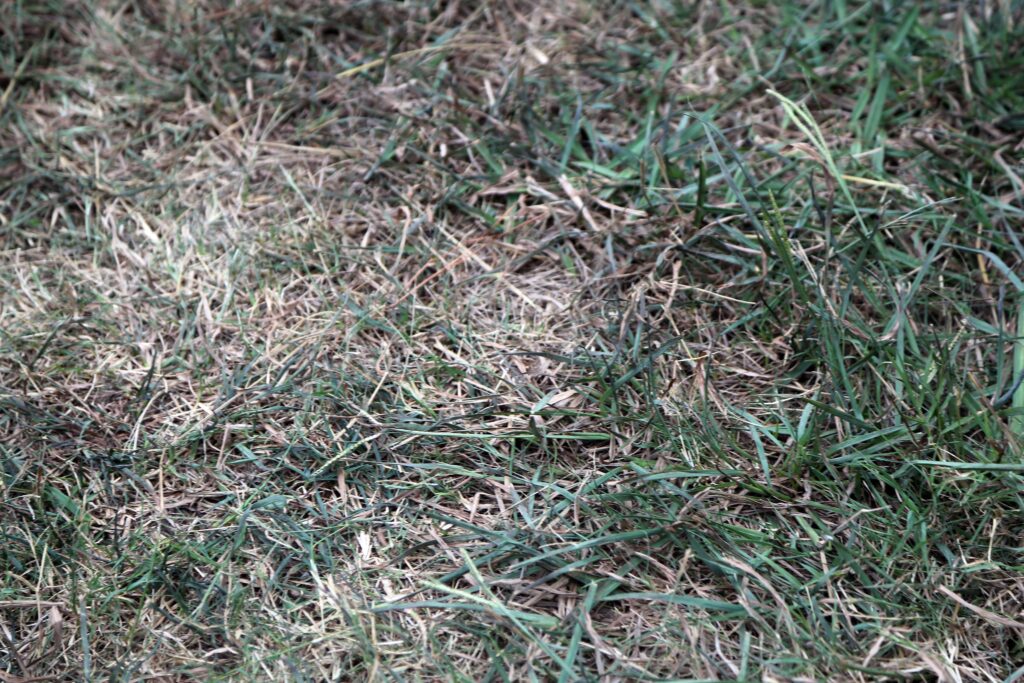
Thatch is the layer of dead grass stems, clippings and organic debris that sits between the green blades and the soil. A little thatch can be helpful. Too much creates a spongy mat that keeps moisture at the surface, encourages moss, and stops roots from getting air and nutrients. The result is pale colour, weak growth and patchiness that no amount of fertiliser can fix.
Five signs you need scarification
- Spongy feel underfoot
Walk across the lawn. If it feels bouncy or springy, you are likely standing on a thatch mattress that needs removing. - Water sits on the surface
After rain or watering, puddles linger rather than soaking in. That usually means the thatch layer is blocking infiltration. - Moss returns quickly
You treat moss and it looks better for a few weeks, then it is back. Moss loves a damp, shaded thatch layer. Until you remove the layer, it will keep returning. - Pale colour despite feeding
You have applied a good fertiliser and seen little improvement. If nutrients cannot pass through the thatch to the soil, they will not help much. - Shallow, weak roots
Lift a small flap of turf with a knife. If roots are shallow, brown and tangled in the thatch rather than the soil, it is time for a clean out.
If you prefer a month by month view of when to do each task, the Year-Round Lawn Calendar for Chichester Gardens gives a simple schedule you can follow
When to scarify in West Sussex
- Spring for a light tidy and moss removal before summer. Aim for March to April when growth is steady enough for a quick recovery.
- Early autumn for deeper renovation with overseeding. September to early October is ideal because the soil is warm and rainfall is more reliable.
On shaded or coastal plots around Chichester Harbour and Emsworth, many lawns benefit from a lighter spring pass and a more thorough autumn pass.
How to scarify properly
- Mow shorter than usual to expose the thatch. Do not scalp the lawn.
- Scarify in two directions. First in one direction, then at right angles. Start light and increase depth if needed.
- Collect debris fully. Remove everything you bring up or it will smother the grass.
- Overseed at 20 to 35 g per m² to refill gaps you have created. Choose a rye and fescue blend suited to West Sussex conditions.
- Topdress 3 to 5 mm of sandy loam or lawn rootzone. Brush it in so you can still see leaf tips.
- Water little and often for two to three weeks, then water more deeply but less often.
Unsure about the best week to sow. This guide pinpoints local timing: Best Time To Overseed A Lawn In West Sussex’s Climate
Feed or scarify first
If the lawn is spongy, feed alone will not solve it. In most renovation cases:
- Scarify first to remove the barrier.
- Overseed and topdress to thicken the sward.
- Apply a suitable feed two to four weeks later once seedlings are established. Use a balanced or gentle autumn feed if you renovate in September.
If your surface is firm but growth is pale and thin with no sponginess, a soil test and a correct feed may be the first step. A professional visit will tell you which approach will work fastest.
For a clear walkthrough of what happens on day one, read What To Expect From Your First Professional Lawn Treatment – West Sussex Guide
Common mistakes to avoid
- Scarifying too deep in midsummer when the lawn is under heat stress.
- Skipping overseeding after a heavy scarify. You will invite weeds into the gaps.
- No topdressing after renovation on clay. You miss the chance to improve the surface structure.
- Cutting too low afterwards. Keep the height at 4 to 5 cm while the lawn fills in.
If you want to keep basic kit on hand, this buyer’s guide helps: The Best Lawn Care Tools For Homeowners In West Sussex
Aftercare timeline
- Week 0 Scarify, overseed, topdress, water lightly daily.
- Week 2 to 3 First light cut at 6 to 7 cm. Only trim the tips.
- Week 3 to 4 Gentle feed if required.
- Week 4 to 6 Reduce watering frequency and water more deeply.
- Week 6 to 8 Colour and density improve. Resume normal mowing pattern.
FAQs
Will scarification ruin my lawn
It may look rough for a fortnight but it is the quickest route to better health if thatch is the problem. Overseeding and topdressing speed recovery.
Do I still need aeration
If the lawn puddles after rain or feels hard underfoot, yes. Aeration relieves compaction so water and oxygen can reach the roots. Many West Sussex lawns benefit from both scarification and aeration in the same season. See the comparison article linked above for when to choose each treatment.
Is there a gentler option than a machine
For very small lawns you can use a spring-tine rake. It is slower and lighter. On medium and large lawns, a powered scarifier is far more effective.
Ready to sort the spongy lawn for good
If you are in Chichester, Emsworth, Arundel or nearby towns, we can assess whether you need a feed, scarification, aeration or a combination. You will get a clear plan with timings that suit the local climate and your garden.