
Call us now
01243 88 24 34
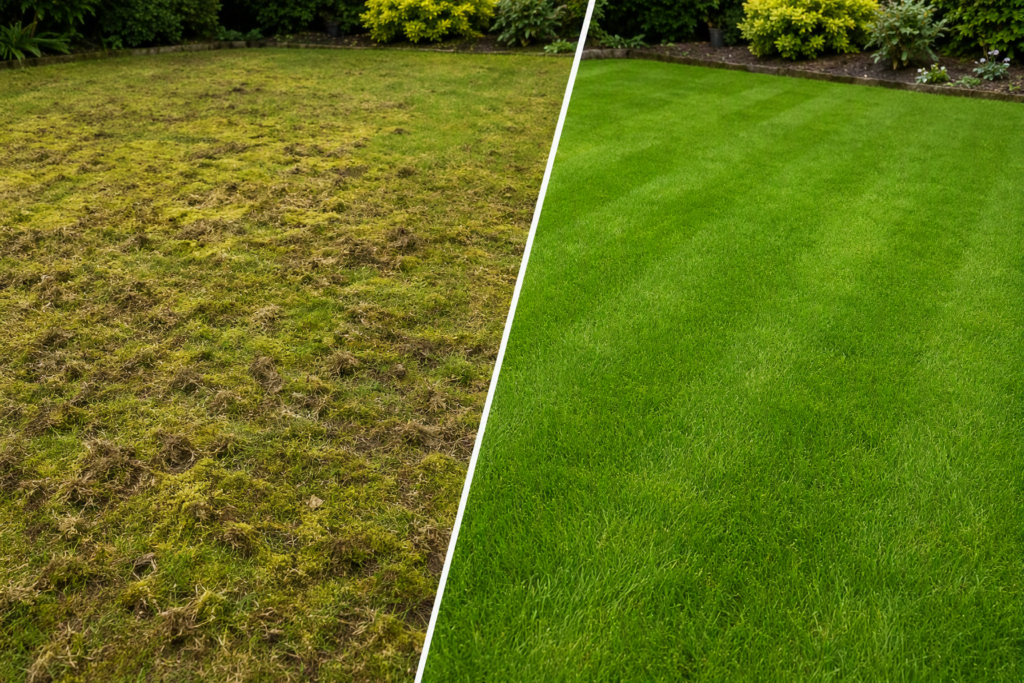
Lawn Scarification in Chichester: Why, When, and How to Revive a Tired Lawn
If your lawn in Chichester is looking patchy, spongy, or overrun with moss, it’s likely suffering from a build-up of thatch. Lawn scarification is one of the most effective ways to restore healthy growth and improve the overall appearance of your grass. While it can look quite drastic at first, scarification is a proven method for long-term lawn improvement; especially in the South Coast climate.
What Is Lawn Scarification?
Scarification is the process of mechanically removing thatch, moss, and organic debris from the surface of your lawn. This is typically done using a specialist machine with rotating blades or tines that penetrate the soil surface.
Over time, lawns in areas like Chichester (where mild, damp conditions are common) naturally develop layers of moss and thatch. These layers block air, water, and nutrients from reaching the roots, leading to poor grass health and increased weed growth.
Why Scarification Matters in Chichester
Local conditions play a big role in lawn health. In Chichester and surrounding areas such as Fishbourne, Bosham, and Southbourne, many lawns struggle with:
- Heavy clay or compacted soil
- High moisture levels from coastal weather
- Moss growth during mild winters
- Thatch build-up from regular lawn use
Scarification tackles these issues head-on by:
- Improving drainage and airflow
- Allowing nutrients to penetrate the soil
- Encouraging stronger root systems
- Reducing moss and preventing its return
When Is the Best Time to Scarify Your Lawn?
Timing is crucial for successful scarification. In Chichester, the ideal times are:
Spring (March to May)
- Best for light scarification
- Helps prepare your lawn for the growing season
- Often combined with feeding and overseeding
Autumn (September to October)
- Ideal for more intensive scarification
- Warm soil and moisture help grass recover quickly
- Perfect for tackling heavy moss problems
Avoid scarifying during very dry summer periods or when frost is likely, as this can stress the lawn further.
What to Expect After Scarification
One of the most common concerns homeowners have is how their lawn looks after the process. Immediately after scarification, your lawn may appear:
- Thin or patchy
- Covered in debris
- Less green than before
This is completely normal. Within a few weeks (especially when combined with overseeding and proper feeding) you’ll start to see:
- Thicker, greener grass
- Improved resilience
- Reduced moss and weeds
Scarification is an investment in your lawn’s long-term health, not just a cosmetic fix.
Professional Scarification vs DIY
While it’s possible to rent or buy a scarifier, professional service often delivers better results. A trained technician can:
- Assess the correct depth and intensity
- Avoid damaging healthy grass
- Combine treatments like aeration and overseeding
- Use commercial-grade equipment for consistent results
For many homeowners in Chichester, this saves both time and the risk of over-scarifying.
Supporting Treatments for Best Results
Scarification works best when part of a broader lawn care programme. For optimal results, consider combining it with:
- Lawn aeration to reduce compaction
- Overseeding to fill in bare areas
- Seasonal lawn feeding
- Targeted moss control treatments
Together, these treatments help create a thick, healthy lawn that naturally resists weeds and disease.
Conclusion: A Healthier Lawn Starts Below the Surface
Scarification may seem like a drastic step, but it’s one of the most effective ways to rejuvenate a tired lawn in Chichester. By removing thatch and moss, you allow your grass to thrive again; resulting in a lawn that looks better, feels stronger, and lasts longer through the seasons.
If your lawn is struggling, professional scarification can make a noticeable difference in just one season. With the right timing and follow-up care, you’ll enjoy a greener, healthier outdoor space all year round.
FAQ: Lawn Scarification in Chichester
How often should I scarify my lawn?
Most lawns benefit from scarification once a year, with lighter treatments in spring and more intensive work in autumn if needed.
Will scarification damage my lawn?
It can look harsh initially, but it doesn’t damage healthy lawns when done correctly. Instead, it promotes stronger growth.
Can I scarify a mossy lawn?
Yes…scarification is one of the most effective ways to remove moss and prevent it from returning.
How long does it take to recover?
Typically 2–6 weeks, depending on the season and aftercare such as feeding and watering.
Should I fertilise after scarification?
Yes. Applying a lawn feed and overseeding helps speed up recovery and improve overall results.