
Call us now
01243 88 24 34
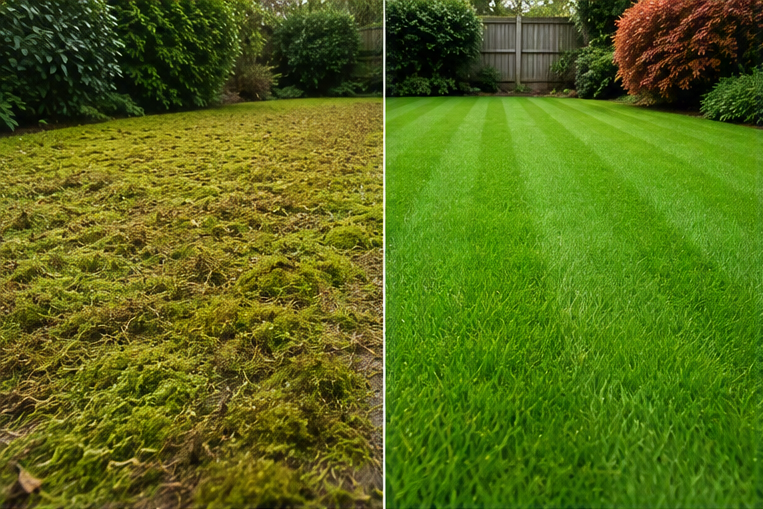
Lawn Scarification in Chichester: Why Your Lawn Needs It More Than You Think
A lawn can look healthy on the surface while hiding problems underneath. If your grass feels spongy, struggles to grow evenly, or is regularly affected by moss, excessive thatch may be the culprit. Scarification is one of the most effective lawn care treatments for restoring healthy growth and creating a thicker, greener lawn.
What Is Lawn Scarification?
Scarification is the process of removing thatch, moss, and organic debris that builds up between the soil and the grass blades. Over time, this layer can prevent water, nutrients, and air from reaching the roots.
Using specialist scarifying equipment, the lawn surface is gently raked to remove this unwanted material and encourage stronger growth.
Why Chichester Lawns Often Need Scarification
Many lawns across Chichester, Bosham, Fishbourne, Lavant, and nearby West Sussex villages experience moss and thatch build-up due to our mild climate and occasional periods of damp weather.
Common signs your lawn may need scarification include:
- Moss spreading across the lawn
- Poor drainage after rain
- Thin patches of grass
- A springy feeling when walking on the lawn
- Reduced response to lawn feeding treatments
The Benefits of Scarification
Improved Airflow
Grass roots need oxygen to thrive. Removing thatch allows better airflow throughout the root zone.
Better Nutrient Absorption
Fertiliser and lawn treatments can penetrate more effectively after scarification.
Stronger Grass Growth
Removing moss and debris gives healthy grass more room to establish and spread.
Reduced Lawn Disease Risk
Excess thatch can trap moisture, creating conditions that encourage fungal problems.
When Should Scarification Be Carried Out?
The best times are generally:
- Spring, between March and May
- Autumn, between September and October
These periods provide ideal growing conditions, helping the grass recover quickly after treatment.
What Happens After Scarification?
Your lawn may initially look thinner than before. This is completely normal. After removing the underlying thatch, the remaining healthy grass has more space to grow.
Many homeowners combine scarification with:
- Aeration
- Overseeding
- Lawn feeding
This combination often produces the best long-term results.
Scarification is one of the most effective ways to revitalise a tired lawn and encourage healthier growth throughout the year. If your lawn suffers from moss, patchiness, or poor drainage, professional scarification could be the solution.
FAQ
No. While the lawn may temporarily look rough, scarification removes unhealthy material and promotes stronger future growth.
Most residential lawns benefit from scarification once every year or two, depending on conditions.
Yes. Scarification helps remove existing moss and creates conditions that make moss less likely to return.