
Call us now
01243 88 24 34
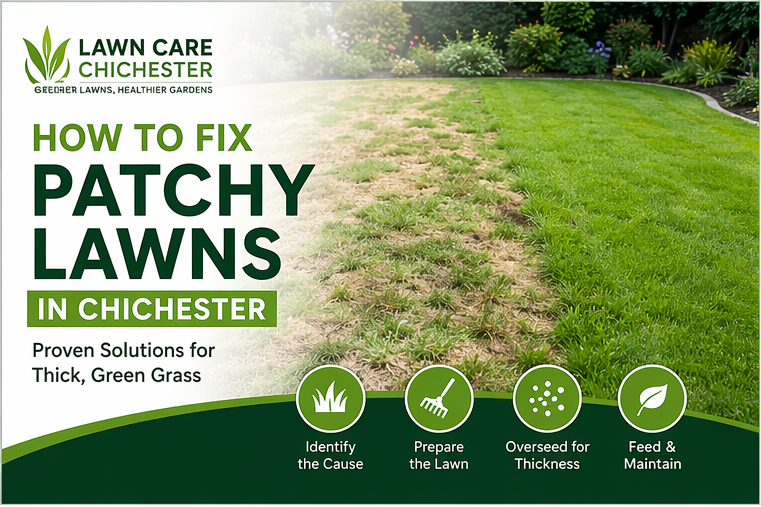
How to Fix Patchy Lawns in Chichester: Proven Solutions for Thick, Green Grass
A patchy lawn is one of the most common issues homeowners face across Chichester and West Sussex. Whether your lawn has bare spots, thinning grass, or uneven growth, the good news is that most problems can be fixed with the right approach.
In this guide, we’ll explain why lawns become patchy and exactly how to restore them to full, healthy growth.
Why Lawns Become Patchy in Chichester
Local soil and weather conditions play a big role in lawn health. Common causes include:
• Heavy clay soil leading to poor drainage
• Compacted ground from foot traffic
• Moss or weed competition
• Pet damage or shaded areas
• Poor seeding or low-quality turf
Most patch issues are a symptom of underlying soil problems rather than just grass failure.
Step 1: Identify the Cause
Before repairing your lawn, look closely at the affected areas:
• Soft, spongy ground often indicates moss
• Hard, dry soil points to compaction
• Thin grass with weeds suggests low fertility
Getting the diagnosis right ensures long-term results rather than repeated repair cycles.
Step 2: Prepare the Lawn Properly
Preparation is crucial for successful repair:
• Rake out dead grass and debris
• Scarify lightly to remove thatch
• Aerate compacted areas to improve airflow
• Add topsoil if levels are uneven
Proper preparation allows new grass seed to establish effectively.
Step 3: Overseed for Thickness
Overseeding is the most effective way to repair patchy lawns. It works by introducing new grass seed into existing turf to:
• Fill bare areas
• Thicken the lawn
• Improve resistance to weeds and disease
Spring and early autumn are ideal times for overseeding in the UK, when conditions support strong growth.
Step 4: Feed and Maintain
Once seeded:
• Apply a suitable lawn fertiliser
• Water lightly but consistently
• Avoid heavy use until established
Healthy growth depends on both nourishment and protection during early stages.
When to Call a Professional
If patchiness keeps returning, deeper issues like soil compaction or drainage may need professional treatment such as:
• Mechanical aeration
• Lawn renovation programmes
• Specialist feeding plans
Final Thoughts
A patchy lawn doesn’t need replacing. With the right approach, most lawns in Chichester can be restored quickly and effectively.
If you want a lawn that looks thicker, greener and more consistent throughout the year, consistent care combined with professional treatments often delivers the best results.
Patchy lawns are usually caused by compacted soil, poor drainage, moss, or lack of nutrients.
Spring and early autumn are ideal because grass grows more easily in these conditions.
Grass can regrow if the soil is healthy, but overseeding is usually required for best results.
Most lawns begin to improve within 2–4 weeks, depending on conditions.